
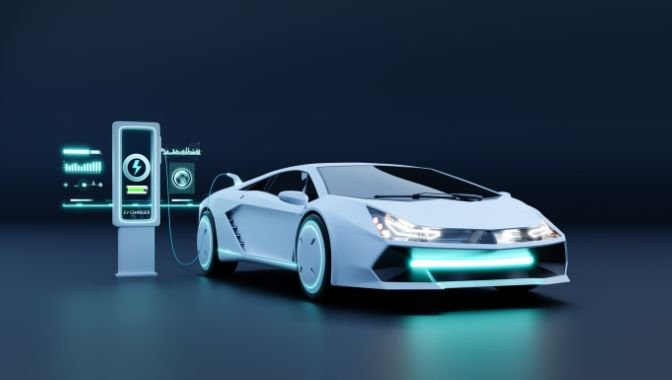
A major breakthrough in electric car technology could soon change how fast and efficient EVs are. British electric motor company YASA has revealed a revolutionary in-wheel motor that delivers extreme power while remaining incredibly lightweight. The new motor weighs only 28 pounds yet produces up to 1,000 horsepower at peak output, setting a new benchmark for electric mobility.
This innovation has caught the attention of the global auto industry because it promises longer driving range, faster acceleration, and lighter vehicles. Compared to today’s electric cars, the performance leap is significant. For example, the 2025 Nissan Leaf produces just over 200 horsepower, while Tesla’s fastest models require multiple motors to cross the 1,000-horsepower mark. YASA’s motor achieves similar power with a single compact unit.
Axial Flux Technology Explained
The secret behind this breakthrough lies in axial flux motor technology. Unlike traditional electric motors that use a cylindrical design, axial flux motors feature a flat, disc-like structure. This allows magnetic energy to flow more efficiently, resulting in higher power density and reduced weight. As a result, vehicles can achieve supercar-level performance without bulky powertrains.
Another key advantage is that YASA’s design avoids rare or exotic materials. This makes large-scale production more realistic and affordable for manufacturers. The motor can also be scaled for different vehicle types, from high-performance sports cars to future passenger EVs.
Why This Could Transform Electric Cars
In-wheel motor placement offers massive design benefits. By removing traditional drivetrains, EVs could shed up to 440 pounds in existing designs. Purpose-built vehicles could save as much as 1,100 pounds overall. Lighter vehicles require less energy, which directly translates into longer battery range.
Also read Imran Ashraf & Hina Afridi’s New Drama Teaser
The system also integrates regenerative braking, capturing energy during deceleration and sending it back to the battery. This reduces reliance on conventional brakes and improves overall efficiency. With more space freed inside the vehicle, manufacturers could increase cabin comfort, storage capacity, or aerodynamic efficiency.
While the technology currently targets high-performance EVs, its long-term impact could reshape the entire electric car market. Faster acceleration, longer range, and lighter vehicles may soon become the new standard rather than the exception.