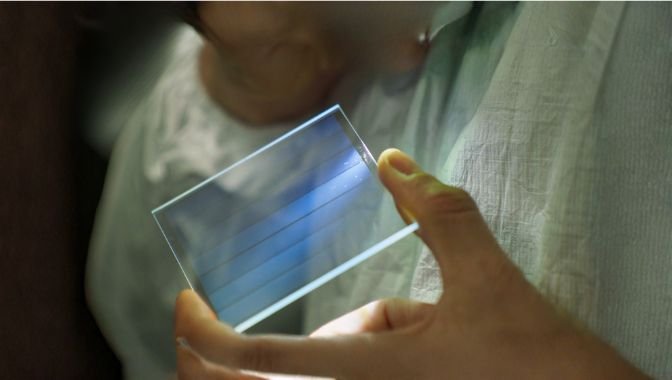
Microsoft researchers have successfully demonstrated a new glass storage device that stores nearly two terabytes of digital data inside a thin plate of borosilicate glass. The system retrieved all stored data without a single error, marking a major step forward in long term data preservation technology.
The breakthrough positions glass as a serious alternative to traditional storage methods such as hard drives and magnetic tapes, both of which degrade within a few years and demand constant maintenance.
Why Traditional Storage Methods Are Falling Behind
Modern storage systems come with significant drawbacks. Hard drives and magnetic tapes deteriorate over time, forcing organizations to repeatedly copy files onto new devices to prevent data loss. This process consumes enormous amounts of time, energy, and infrastructure, particularly for large archives where data may sit unused for extended periods.
As global data volumes continue to grow rapidly, the limitations of existing storage technology are becoming increasingly difficult to ignore. Therefore, researchers are actively exploring more durable and energy efficient alternatives.
Glass storage offers a fundamentally different approach. Once data is written into the glass, it stays intact without requiring electricity or regular maintenance. Consequently, organizations could store critical information for thousands of years without any ongoing technical intervention.
How Microsoft Writes and Reads Data in Glass
The system uses femtosecond laser pulses to write information directly inside the glass. These are extremely fast bursts of light that last only a fraction of a trillionth of a second. Each pulse creates microscopic marks within the glass structure, subtly altering how light travels through the material. Every mark represents a tiny unit of data.
Because the data sits inside the glass rather than on its surface, it stays protected from scratches and environmental damage. This internal placement makes the storage medium far more resilient than conventional options.
To retrieve the stored data, researchers shine light through the glass and capture the resulting patterns using a microscope camera. Each microscopic mark, known as a voxel, acts as a three dimensional data point. Advanced software then analyzes these patterns, reconstructs the original data, and corrects any minor distortions to ensure accurate recovery.
Durability and Real World Testing
One of the most impressive aspects of this technology is its durability. Tests show that data stored in glass can survive more than 10,000 years at room temperature. Furthermore, the material can withstand extreme conditions including high temperatures, boiling water, and physical scratches without any damage to the stored information.
Researchers describe this resilience as surviving “benign neglect,” meaning the storage medium needs no careful handling or special conditions to remain intact.
Also Read PSL Ball Tampering Case Against Fakhar Zaman Reaches Final Stage
Microsoft has already used the technology to store real world content, including the film Superman and large music archives, proving that the system can handle practical and sizeable datasets effectively.
Challenges That Still Remain
Despite its promise, glass storage still faces notable hurdles. The current writing speed sits at around 66 megabits per second, which is slower than traditional magnetic tape systems. Scientists believe that using multiple laser beams simultaneously and improving parallel processing could eventually boost these speeds significantly.
Microsoft has not yet announced any plans to commercialize the technology. Future progress will depend on reducing production costs, increasing writing speeds, and building automated systems to manage the glass media at scale.