
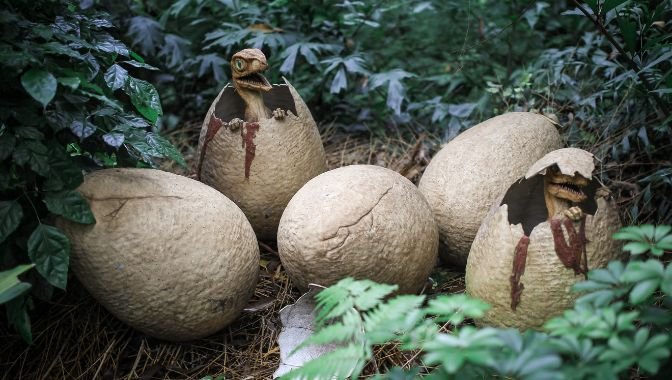
Paleontologists in southern France have made one of the most remarkable dinosaur discoveries in recent history. Hundreds of fossilized eggs dating back nearly 72 million years have been uncovered at the Mèze fossil site. Many of the eggs remain completely intact, with shells and internal structures still visible after tens of millions of years underground.
The discovery offers an extraordinary window into dinosaur reproduction and nesting behavior during the final chapter of the Cretaceous period.
A Prehistoric Nesting Ground Like No Other
Scientists conducting winter excavations at Mèze exposed a vast concentration of dinosaur eggs preserved within Upper Cretaceous rock layers. According to Alain Cabot, director and curator of Musée Parc des Dinosaures de Mèze, the site represents an exceptional concentration of fossilized eggs spread across roughly 15 square miles.
More than 100 eggs came to light within just weeks of excavation beginning. Researchers believe many more remain buried beneath the surrounding sediment. The sheer scale of the fossil layer strongly suggests that this area once served as a large prehistoric nesting ground used repeatedly by dinosaurs over time.
Initial analysis confirmed that most of the eggs belong to titanosaurs. These were massive, long necked herbivorous dinosaurs that dominated the Late Cretaceous period. However, scientists also identified eggs from smaller species, indicating that multiple dinosaur types shared the same breeding environment.
Among the findings were eggs linked to armored ankylosaurs and small carnivorous theropods. Researchers also identified the rare species Prismatoolithus caboti among the specimens. The diversity of species found at a single site points to a shared nesting habitat, similar to how modern bird colonies gather in protected environments to raise their young.
How the Eggs Survived 72 Million Years
The remarkable preservation of the eggs comes down to ancient geological conditions at the site. Geologists believe that periodic flooding rapidly buried the eggs under layers of sediment shortly after they were laid. This process shielded them from erosion and environmental damage over millions of years.
The floodplain conditions effectively sealed the nests and created natural time capsules from the age of dinosaurs. As a result, scientists today can study eggs that retain their original shell structure and internal detail with exceptional clarity.
This level of preservation is extremely rare in paleontology. Therefore, the Mèze site stands out not only for the quantity of eggs discovered but also for the quality of their condition after such an enormous passage of time.
Public Access and Ongoing Excavations
The discovery has also captured significant public attention since the museum shared updates about the find online. In response to growing interest, ongoing excavations at the Mèze site are now open to the public. Visitors can watch scientists carefully uncover remains dating back more than 70 million years in real time.
Also read SharPasand Ends on Episode 52 With a Realistic and Thought Provoking Finale
This combination of scientific significance and public accessibility makes the Mèze discovery particularly special. Researchers expect further excavations to reveal even more eggs and potentially new species in the months ahead.
The find adds an important new chapter to our understanding of how dinosaurs lived, reproduced, and raised their young during one of the most fascinating periods in Earth’s history.